Wooden Grave Markers
America’s most fragile memorials — where the last ones survive, what destroys them, and how to care for one without doing harm.
Long before most families could afford carved stone, they marked their graves with wood. A painted board, a simple cross, a post with a name cut into it. On the frontier, in mining camps and in poor rural communities, a wooden marker was often the only marker there ever was.
Almost all of them are gone. Wood rots, burns and crumbles in a few decades in most of the country, and when the marker goes, the grave is often forgotten with it. The few that remain are some of the rarest artifacts in any American cemetery.
A Short History
Wooden headboards were the everyday grave marker of the American frontier. They were cheap, quick to make, and needed no stonecutter. Many were made by the family or friends of the person who died, which gives the survivors a very personal character: hand-cut lettering, painted names, small tin plates.
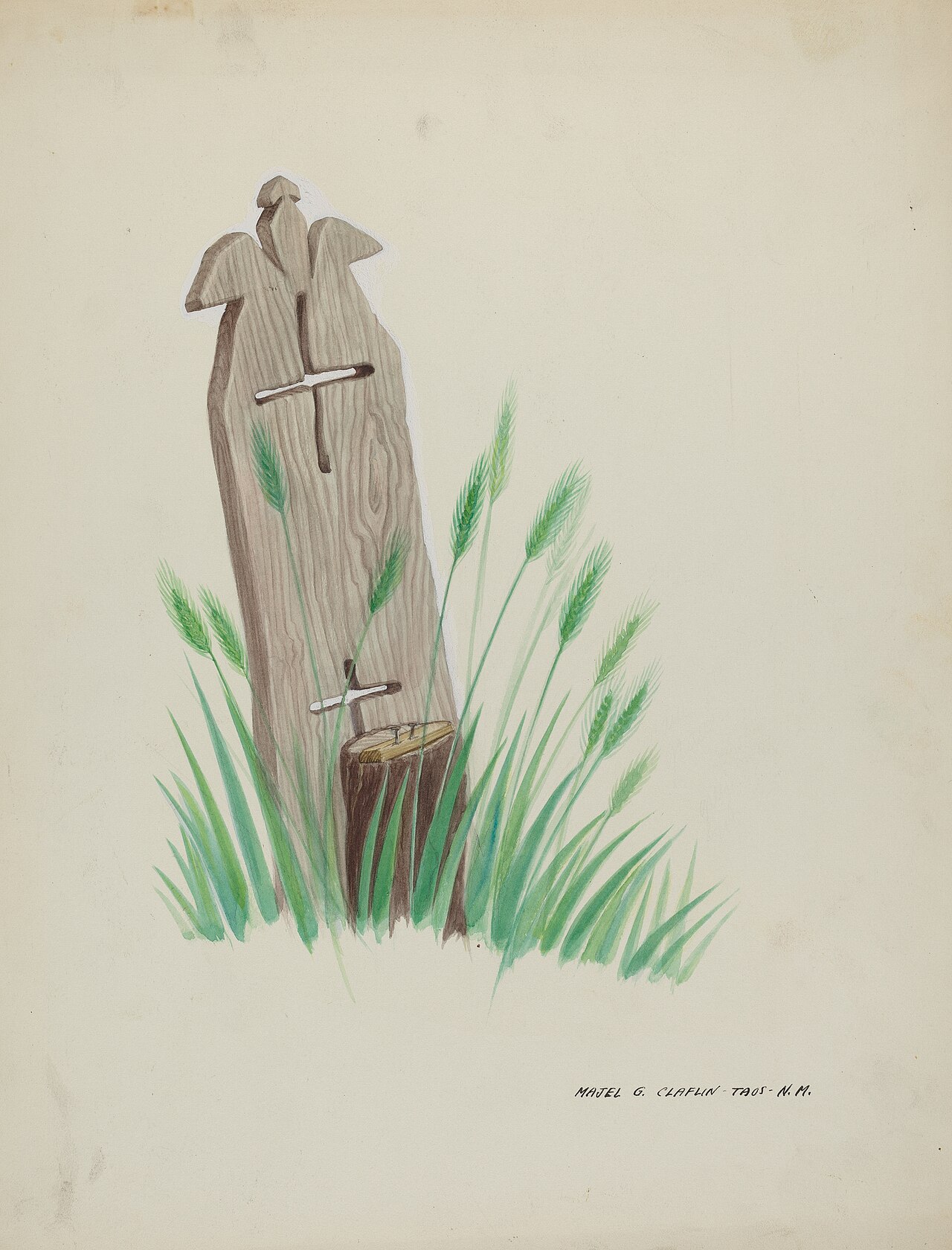
The U.S. Army used them too. In September 1861 the War Department ordered a wooden headboard for each soldier’s grave, painted white with black lettering. They didn’t last. By the end of the Civil War, officials estimated each board cost $1.23 and lasted no more than about five years, and with hundreds of thousands of soldiers’ graves to mark, replacing them over and over would cost more than a million dollars. In 1873 the government switched to the marble headstones we know today.
Families came to the same conclusion over time. As railroads made marble and granite cheap to ship, wooden markers were replaced with stone, or simply left to fall apart.
Where Wooden Markers Still Survive
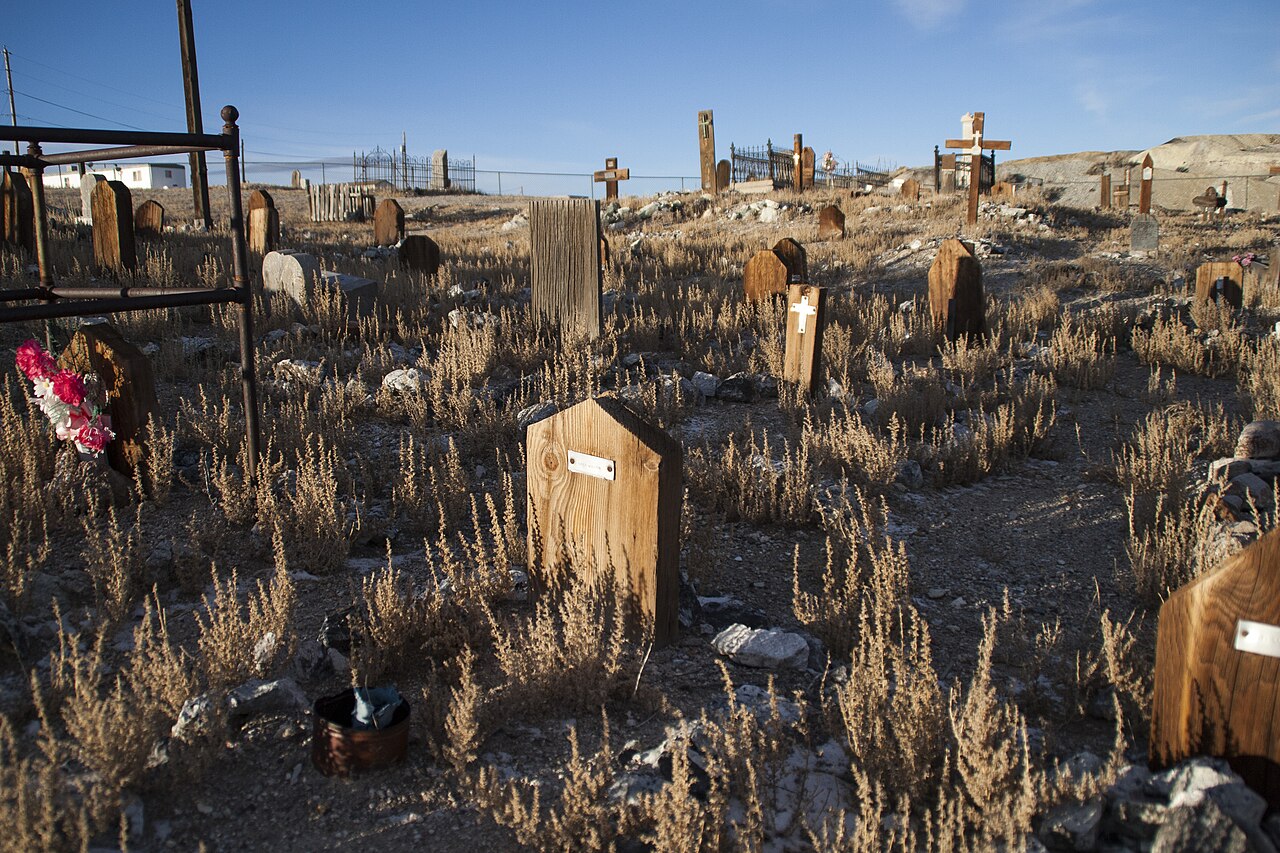
Water is wood’s enemy, so the survivors are concentrated in the driest parts of the country — the deserts and high basins of the West, especially old mining towns.
- Old Tonopah Cemetery, Nevada. Most of its markers are wood, many with punched-tin plates naming the person buried there. Graves date to the boom years of the early 1900s, including victims of the 1911 Belmont Mine fire. The cemetery closed in 1911 after mill tailings washed over the graves, and the dry climate has preserved the wood ever since.
- Bodie, California. The ghost town’s cemetery is mostly stone, but its wooden grave fences survive in a collapsed and weathered state, and preservation groups have worked on how to manage them.
- Rhyolite and other desert mining camps. Scattered wood-and-tin graves survive across Nevada, eastern California, Arizona and Utah.
Outside the dry West, original wooden markers are very rare. A few survive where they were protected — under a roof, in a museum, or in a family’s barn after being taken in from the cemetery.
What Destroys Them
- Moisture. The biggest threat. Wood that stays above about 20 percent moisture is at risk of decay and insect attack; above 30 percent the risk is high. The danger zone is the ground line, where a post can rot from the inside while looking sound outside.
- Rot fungi. Brown rot, white rot and soft rot all attack damp wood. Moss growing on a marker is a warning sign that it is staying wet.
- Insects. Termites are the most serious, often eating from the core outward where nobody can see it.
- Sun and wind. Ultraviolet light grays the surface, and wetting, drying, freezing and wind-blown grit slowly wear it away. The lettering is usually the first thing lost. In the desert this is the main enemy.
- People and machines. Mowers, string trimmers, falling limbs, livestock and fire destroy more wooden markers than time does.
Caring for a Wooden Marker
The guidance below follows the National Park Service’s National Center for Preservation Technology and Training (NCPTT), which published a reference manual on wooden artifacts in cemeteries. The short version: do as little as possible, and fix the moisture problem before anything else.
Do
- Photograph it first, front, back and sides, with low-angle light to bring out worn lettering
- Write down every word you can read, and where the marker stands
- Brush off dirt and debris gently with a soft natural-bristle brush
- Cut back grass and brush around it by hand, and keep plants off the base
- Let in sun and air — moss fades when the wood dries out
- Lift a fallen marker off wet ground onto a dry, flat stone
- Call in a conservator or preservation carpenter for any repair
Don’t
- Pressure-wash, scrub or scrape it
- Pull or scrape off moss — it spreads the spores
- Use stone cleaners on wood; they were never made for it
- Coat it with linseed oil, turpentine, sealers or water repellents — they darken the wood, can feed mildew, and wear off within months
- Repaint it on your own
- Drive screws or nails through the face
- Run a mower or trimmer near it
Repairs and paint are decisions for professionals. NCPTT notes that many past repairs have failed, and that epoxy can trap moisture and speed up decay. Paint protects wood from sun and water but changes the marker’s appearance and has to be maintained forever. Professionals may splice in new wood below the ground line, set a post on a stone pier, or insert borate rods to discourage rot and insects.
For a marker of real historic importance, the best answer is sometimes to move the original indoors to a museum or historical society and set a faithful replica in its place, made of the same kind of wood, at the same size, and quietly dated so no one mistakes it for the original later.
Recording One You Find
A wooden marker can disappear in a single grass fire, so a good record matters as much as the marker itself. Photograph it, transcribe it, and note its location with GPS. Share the record with the cemetery’s owner, the local historical society, and a memorial site such as Find a Grave or BillionGraves, so the name survives even if the wood does not.
Our free Stone Assessor recognizes wooden markers along with stone, and our free Ground Explorer can help you find forgotten burial grounds — including family plots whose wooden markers vanished long ago and left only a row of sunken graves.
Sources
- National Center for Preservation Technology and Training, Wooden Artifacts in Cemeteries: A Reference Manual (2008).
- U.S. Department of Veterans Affairs, National Cemetery Administration, history of government headstones and markers.
- National Park Service, Preservation Brief 48: Preserving Grave Markers in Historic Cemeteries.
- Bodie Foundation, “Bodie Cemetery Gets New Life.”
- Visitor accounts of the Old Tonopah Cemetery, Tonopah, Nevada.
Guardian Stone Care & Restoration, November 2026.